
Autologous vs Allogenic Cell Therapies
What are cell-based therapies?
Cell-based therapies are a form of regenerative medicine that involves using cells to repair, rejuvenate, or replace diseased or damaged tissues to improve the patient's health. This promising avenue of therapeutics has two types of cell sources: allogeneic, using donor cells, and autologous, using a patient’s own cells. There are very specific uses for each cell type, as well as some notable limitations and risks that we’ll cover in this article.
Allogeneic cell therapies
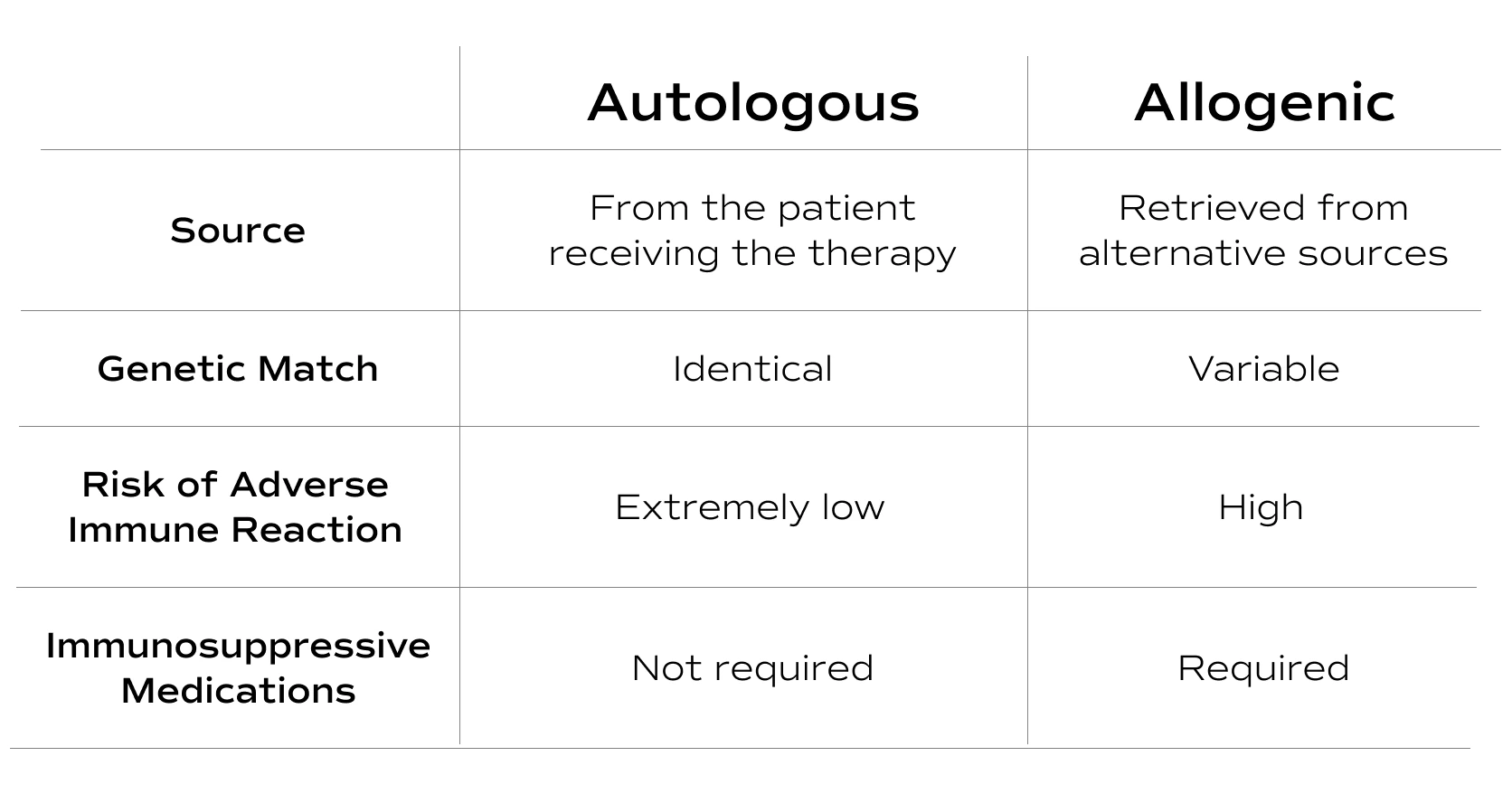
Allogeneic therapies use cells collected from a donor sample. There are significant risks of immune rejection when allogeneic cell therapies are used. For that reason, immunosuppressive therapies are given in combination with allogeneic treatments, which increases the risk of infections and other complications due to immunosuppression. Some of the complications could include graft-versus-host disease or rejection of the donor cells.
However, there are some instances where your own cell population is compromised and donor cells and tissues are required. Allogeneic cells may also be leveraged with immune-privileged tissues. These tissues are able to tolerate the introduction of cells and tissues that are not an identical match to the recipient. One example of this is the eye, which limits local immune reaction to preserve vision.
Autologous cell therapies
Autologous therapies use the cells derived from the patient’s own body. While processes can vary, the patient's cells are first collected, then they are cultured and expanded outside of the body and reintroduced into the donor. Using a patient's own cell source means they have cells genetically matched to their bodies and won’t have to worry about the adverse immune reactions that could come with using donor cells. Additionally, there would be no need for immunosuppressive therapies as the cell source is identical to you and your genetics. And when it comes to aesthetic treatments like skin and hair, autologous treatments will match the unique colors and tones in appearance.
Learn more about autologous cell therapies approved in Canada. Having a bank of your own cells to leverage in cell based therapies means that you won’t have to worry about adverse reactions from allogeneic cell sources. Learn more about getting banked here.

Acorn Biolabs