

AT A GLANCE:
- PRP and stem cell-based treatments are both regenerative approaches to hair restoration—but they work very differently.
- PRP delivers a short-term boost of growth factors, while stem cell-derived treatments focus on longer-term follicle signaling and repair.
- The right option depends on the cause of hair loss, stage of thinning, and whether you’re looking for temporary stimulation or future-ready regeneration.
Hair loss treatments have come a long way from just targeted shampoos and transplants. Today, regenerative therapies like PRP and stem cell-based hair restoration are changing how clinicians think about thinning hair: not as a cosmetic issue to mask, but as a biological process to target at the source.
But while these cutting edge therapies are often mentioned in the same breath, they’re not interchangeable. They work through different mechanisms, offer different timelines, and serve different goals.
If you’ve ever wondered which one actually makes sense for you, here’s a clear breakdown. (You know, without the jargon.)
What Is PRP Hair Restoration?
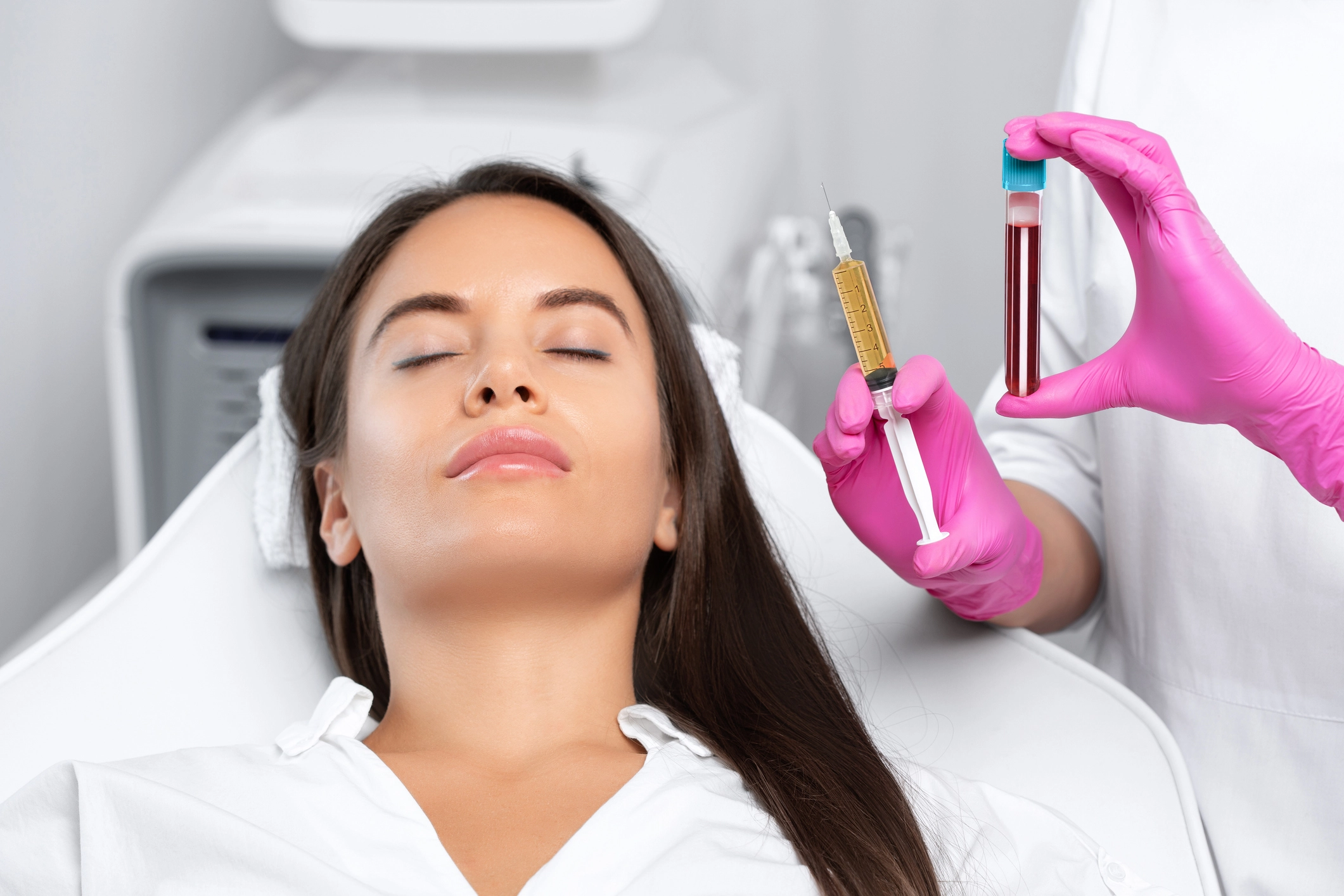
PRP stands for platelet-rich plasma, a concentration of platelets derived from your own blood.
How it works:
- A clinician draws a small vial of your blood.
- The blood is spun in a centrifuge to isolate platelet-rich plasma.
- That plasma is injected into thinning areas of the scalp.
Platelets are best known for their role in healing wounds. In hair restoration, they deliver signaling molecules that can:1
- Increase blood flow to follicles
- Reduce inflammation
- Encourage follicles to stay in (or re-enter) the growth phase
What PRP is often recommended for:
- Early-stage thinning
- Stress-related shedding (like telogen effluvium)
- Supporting hair regrowth after a transplant
- Patients looking for a minimally invasive, same-day treatment
PRP can be effective for hair restoration. But its impact depends heavily on consistency. Because platelets are short-lived, results often require multiple sessions per year to maintain.
What Is Stem Cell-Based Hair Restoration?
Stem cell-based hair therapies work by supporting the signals that tell your hair follicles how to grow, repair, and stay active—rather than just giving them a temporary boost.
Most modern treatments don’t involve injecting live stem cells into the scalp. Instead, they use the regenerative signals stem cells naturally release. This is called the secretome: a powerful blend of growth factors and microscopic messengers that help follicles function the way they did when they were younger and healthier. This natural, regenerative cocktail boasts 34x the growth factors of PRP.2
How it works:
- Stem cells are collected from the patient. (At Acorn, we do this by painlessly collecting a few hair follicles.)
- These cells are processed in a lab into a concentrated, personalized secretome serum.
- The serum is applied or injected to support follicle repair, regeneration, and communication.
What stem cell–derived treatments are best for:
- Pattern hair loss (androgenetic alopecia)
- Hair thinning related to aging
- Follicles that are miniaturizing but still present
- Long-term preservation of hair health
Because these treatments work by improving how hair follicles communicate and repair themselves, they’re often viewed as a more future-focused approach: one that addresses why hair loss happens, not just how it looks.
PRP vs. Stem Cell Hair Restoration: What Are the Key Differences?
Here’s where the two approaches really diverge:
Source of signals: PRP relies on platelets from your blood. Stem cell therapies rely on signals released by regenerative cells.
Duration of effect: PRP delivers a short-term burst of growth factors. Stem cell therapies go to the source of follicle miniaturization, supporting longer-term repair and communication.
Mechanism: PRP stimulates follicles. Stem cell-based therapies aim to re-educate them.
Maintenance: PRP typically requires frequent repeat sessions. For secretome therapies, your stem cells are banked for future use: for hair restoration, and other longevity treatments.
Best use case: PRP can be a great entry-level option. Stem cell therapies are better positioned for addressing age-related or progressive hair loss.
What are Exosomes and Secretome?
Not all stem cell hair restoration treatments are created equal. As you peruse different options, you might see two buzzwords come up: exosomes and secretome.
Exosomes are tiny extracellular vesicles that carry instructions between cells. But they’re just one component of the broader secretome: the full set of regenerative signals stem cells release.3
In hair restoration, these signals can:
- Encourage dormant follicles to re-enter the growth phase
- Support the cells that anchor and nourish the follicle
- Reduce inflammatory signals linked to follicle miniaturization
This is where next-generation hair restoration is headed: not replacing follicles, but supporting the biology that keeps them active. By containing the full spectrum of growth factors and restoration signals, secretome is the most potent option.
Can PRP and Stem Cell Therapies Be Combined?
Yes, and many clinicians already do. PRP can enhance circulation and create a supportive environment, while stem cell-derived signals work on deeper regenerative pathways. Used together, they may offer complementary benefits, especially in early or moderate hair loss.
That said, your hair landscape is unique to you: Combining treatments works best when they’re part of a personalized plan, not a one-size-fits-all protocol.
The Role of Cell Banking in Hair Restoration
One flag with regenerative treatments is that they rely on your own biology, which changes with age.
Cell banking allows individuals to preserve their most regenerative cells earlier in life, before age-related decline advances. Those cells can later be used for hair-focused treatments—along with skin treatments and other longevity advancements. (Think of it as the ultimate regenerative insurance plan as the science continues to evolve.)
This shifts hair restoration from reactive to proactive. It’s less about chasing loss, and more about preserving potential.
Unlock 34x More Growth Factors with Acorn
PRP and stem cell therapies are both useful tools with different strengths.
PRP offers short-term stimulation. Stem cell therapies focus on long-term follicle health and regeneration, with a potent cocktail of growth signals–especially for formulas that incorporate the entire secretome, which boast 34x the growth factors of PRP.
Acorn YOUTM is one of them: harnessing stem cells from your existing hair follicles to develop your own personalized secretome product. Patients using Acorn YOUTM saw visible changes to hair density and hair quality in 90 days—with many noticing changes in just a few weeks.
Ready to support your hair’s regrowth at the cellular level? Get started now.
FAQ
Q: What’s the fundamental difference between stem cell hair loss therapies and PRP?
A: PRP works well for early thinning and short-term stimulation, while stem cell-based treatments target longer-term follicle health.
Q: Does PRP regrow hair permanently?
A: PRP can improve density and thickness, but results often require ongoing maintenance. After all, it doesn’t stop the underlying aging process of follicles.
Q: Is stem cell collection invasive?
A: Historically, yes—but that’s rapidly changing. At Acorn, for example, we bank stem cells by way of painless hair follicle collection.
Q: Can these treatments replace transplants?
A: Not entirely, but they may reduce the need for surgery by preserving existing follicles and slowing progression. The growth factors in stem cell therapies can also speed healing and regeneration after a transplant.
FURTHER READING:
- Paichitrojjana, A., & Paichitrojjana, A. (2022). Platelet Rich Plasma and Its Use in Hair Regrowth: A Review. Drug design, development and therapy, 16, 635–645. https://doi.org/10.2147/DDDT.S356858
- Tran NT, Truong MD, Yun HW, Min BH. A novel cell-free regenerative therapy for hair loss: human fetal cartilage progenitor cell secretome. Biomaterials. 2026 Feb;325:123627. doi: 10.1016/j.biomaterials.2025.123627. Epub 2025 Aug 11. PMID: 40811943.
- Park, S. R., Kim, J. W., Jun, H. S., Roh, J. Y., Lee, H. Y., & Hong, I. S. (2018). Stem Cell Secretome and Its Effect on Cellular Mechanisms Relevant to Wound Healing. Molecular therapy : the journal of the American Society of Gene Therapy, 26(2), 606–617. https://doi.org/10.1016/j.ymthe.2017.09.023
This article has been medically reviewed by:
Amatullah Fatehi | MSc, Director of Product Development and Innovation
Amatullah Fatehi is a regenerative medicine scientist with expertise in cell physiology and stem cell biology. She led the development of Acorn’s hair-follicle-derived secretome product and oversees key research and product innovation initiatives.