

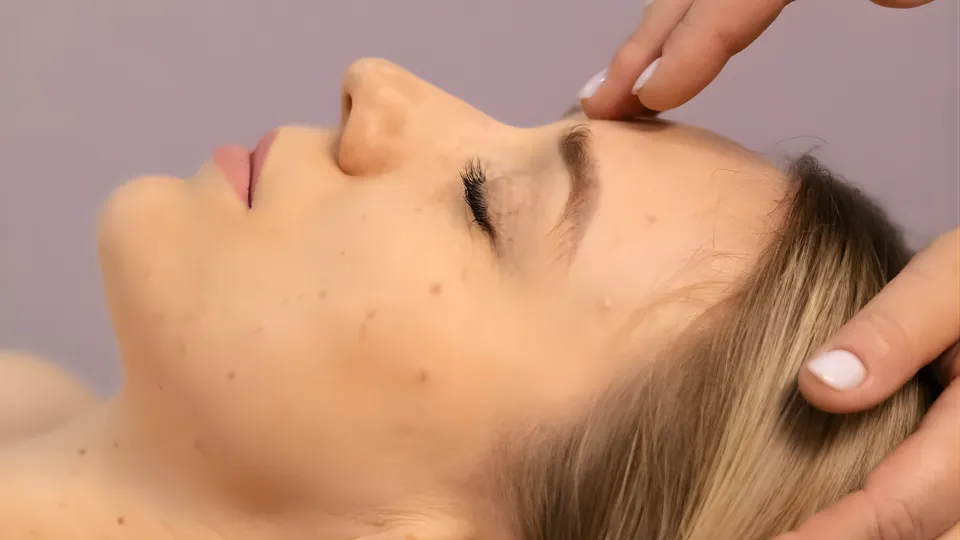
Walk into a high-end aesthetics clinic in 2030, and it won’t feel like the Botox parties of the mid-aughts… or even the vampire facials of today. Instead, you’ll find a menu that looks less like a medispa and more like a personalized longevity lab.
The shift is already underway. For decades, anti-aging focused on disguising decline: paralyzing wrinkles, filling volume loss, and resurfacing skin. But the next frontier is about reprogramming biology itself, tapping into regenerative science to make our cells and tissues younger from the inside out.
With guidance from experts at the forefront of this transition, we’re mapping what the aesthetics clinic of 2030 might realistically look like. Much of the science is already here—but the next six years will change how these tools are delivered, combined, and personalized.
Ready for a tour?
The First Stop: Clocking Your Biological Age
Instead of a quick intake form, your visit begins with a full biological workup. AI-driven scans measure skin elasticity, hair follicle activity, even the cellular signals coursing through your blood. A genetic and biomarker panel maps out how your tissues are actually aging, and an epigenetic clock measures your biological age in years.
“By 2030, we expect personalized regenerative therapies—tailored to your genetics and biological profile—to define the future of aesthetics,” says Dr. Nazish Ahmed, regenerative medicine expert and Senior Director at Acorn.
It’s less “pick your filler,” and more “here’s the exact protocol your cells are asking for.”
What’s on the Menu?
Once your biological age is clocked, you work with your practitioners on a custom treatment plan designed for your cells, your genetics, and your goals. Today, the building blocks of regenerative aesthetics already exist: PRP, exosomes, skin boosters, peptides, and energy devices. But by 2030, these treatments become far smarter, more personalized, and far more integrated. Instead of choosing one modality, clinics stack coordinated regenerative inputs based on biomarkers, genetics, and tissue needs. Think of it as a true dovetailing of regenerative medicine and aesthetics—a holistic approach that abides by the philosophy that we only look as good as our cells are healthy.
Here’s what’s on the menu:
Cellular Regeneration Therapies That Go Even Further
In addition to filling or freezing, treatments reawaken your body’s own repair systems:
- Secretome-derived serums (once reserved for microneedling or laser pairings) become the backbone of regenerative aesthetics. And by 2030, injectable secretome formulations take center stage, offering deeper and more precise tissue repair.
- Hair thinning is rapidly becoming a thing of the past. Thanks to deeper signaling, hair restoration shifts from “treating loss” to preserving growth. Secretome-based follicle support becomes routine, and thinning hair becomes less of a late-life inevitability—corrected early with regenerative inputs.
- Bioelectric stimulation “charges” sluggish cells and boosts tissue repair. (Basically, we’ve taken biohacking to an entirely new level.)
A Shift Toward Proactive Cell Banking
It’s a standard line item, not a futuristic luxury. As one of our experts put it, it’s like scheduling regular tuneups for your car before it breaks. In our 2030 clinic, aesthetics shift from reactive fixes to proactive biological maintenance, and banked stem cells make it possible to take a prescriptive, personalized approach to regeneration before issues ever surface.
Clinics preserve your most potent cells and biofluids for aesthetic and therapeutic use. And Acorn has set a new standard for stem cell accessibility thanks to its hair follicle harvesting method. (Think of it as making deposits in your longevity bank—now, in 2030, and beyond.)
Precision Longevity Techniques
The menu doesn’t stop at skin and hair. Aesthetics clinics increasingly become the “glue” between functional medicine and longevity care. Many providers are already shifting into this hybrid model, offering hormones, peptides, metabolic support, gut health protocols, and biologic repair plans in the same clinic where you book your microneedling. But in 2030, we’re predicting it becomes the standard.
And beyond skin and hair treatments, here’s what you can expect to see on the menu:
- Age “reversal” protocols, where therapies are tracked against your epigenetic clock.
- Personalized infusions that target cellular resilience.
- Lifestyle prescriptions (nutrition, exercise, sleep) that are fine-tuned to your biomarkers.
“Hair restoration and aesthetics will increasingly adopt regenerative cellular therapies and next-generation technologies designed to restore, not just conceal, the signs of aging,” says Dr. Ahmed. And a patient’s weekly plan might include a peptide for muscle tone, a mitochondrial-support infusion, and a microneedling session finished with personalized secretome.
What’s No Longer Center Stage
Not everything makes it onto the 2030 menu. Some treatments still exist, but they’ve been moved from the spotlight to the sidelines:
- Botox as default. Regenerative therapies strengthen muscle tone, improve skin elasticity, and enhance volume retention—making neuromodulators a bonus for expression management, not the backbone of anti-aging.
- Cookie-cutter plans. With access to their personal longevity blueprint, patients are more focused on amplifying their natural biology (and beauty!) than adopting a one-size-fits-all look.
- Surface-only fixes. Lasers and chemical peels still have a role, but they’re paired with regenerative treatments that speed healing and address aging at its source.
By the time you leave, you’ll carry a personalized care plan for both your skin and your biology.
–
The Clinic of Tomorrow
Goodbye medspas, hello longevity hubs: places where aesthetics, regenerative medicine, and preventative health converge. Experts describe this evolution as the “post-symptom era” of aesthetics: where treatments don’t wait for wrinkles, laxity, or loss. Instead, they tune biology continuously, much like preventative medicine, but with the cosmetic outcomes patients are actively seeking.
“It’s an exciting time,” says Dr. Ahmed. “We’re at the forefront of regenerative science, pushing beyond today’s injectables to pioneer the next era of longevity and aesthetics.”
FAQs
Q: What’s the main difference between chronological and biological age?
A: Chronological age is how long you’ve been alive; biological age measures how well your body is performing at the cellular level. It’s a more accurate indicator of overall health and longevity.
Q: What does “regenerative aesthetics” actually mean?
A: Instead of disguising aging, regenerative aesthetics supports the body’s own repair systems. The goal is to improve how cells function—boosting collagen, elasticity, and recovery—so skin and hair age more slowly and resiliently.
Q: Why are hair follicles used to collect stem cells?
A: Hair follicles contain highly regenerative stem cell populations and can be collected quickly and painlessly. This makes cell banking more accessible than older methods like bone marrow or fat extraction.
Q: Is this just about skin and hair?
A: No. By 2030, aesthetics clinics increasingly overlap with longevity and functional medicine, addressing hormones, metabolism, inflammation, and cellular health alongside cosmetic outcomes.
—
This article has been medically reviewed by:
Dr. Nazish Ahmed is a regenerative medicine scientist with more than 20 years of expertise in stem cell biology, cryogenics, and biomanufacturing. She holds a PhD in Pharmaceutical Engineering focused on stem cell–based cartilage regeneration and has authored numerous peer-reviewed publications.