

AT A GLANCE:
-
- Cellular “youth” isn’t about your age in years—it’s about how well your cells function.
- Young cells generate energy efficiently, repair DNA effectively, and regulate inflammation precisely.
- As cells age, they accumulate damage, experience mitochondrial decline, shortened telomeres, and increased inflammation.
- Regenerative science now focuses on cellular signaling to support repair… and help cells act younger.
Is it really possible to reverse aging? From a technical standpoint, the answer is a resounding no. After all, aging is a complex biological process shaped by time, environment, and cellular wear.
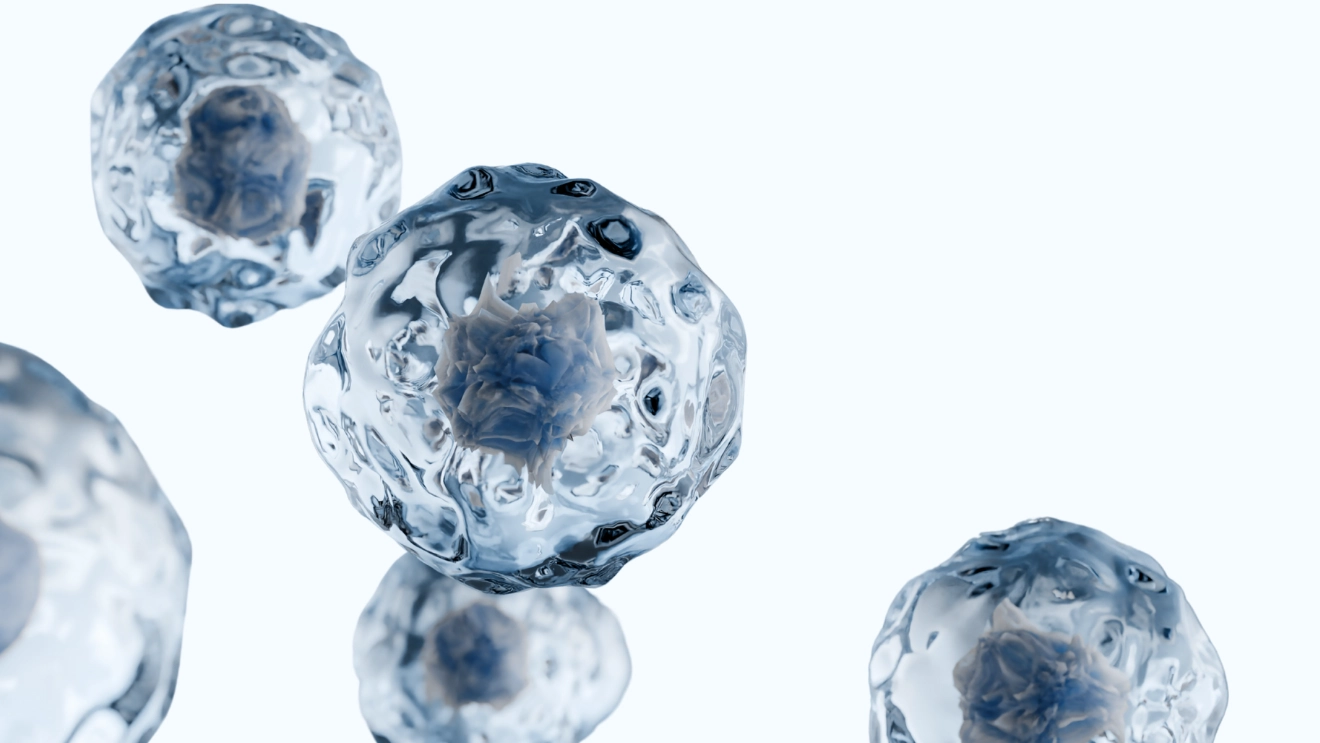
But regenerative science has reframed the conversation. Instead of trying to turn back time, researchers are focused on restoring cellular function—because aging begins at the cellular level. A youthful cell behaves differently than an aging one. It produces energy efficiently, repairs DNA damage effectively, and regulates immune function more effectively. But as those functions decline, tissues begin to age.
To better understand where regenerative medicine is headed, we first have to understand what makes a cell young in the first place.
But First: A Refresher on Biological Aging vs. Chronological Aging
When we talk about helping cells “act” younger, we’re referring to our biological age (how youthfully our body functions) rather than our chronological age (the number of candles on the birthday cake).
Biological age reflects how well your body is functioning relative to your chronicle age. It’s influenced by genetics, lifestyle, environment, and—perhaps most importantly—your resulting cellular health.
At its core, biological aging is the cumulative result of cellular aging. As cells lose efficiency—in energy production, DNA repair, inflammatory control, and communication—tissues begin to decline. When enough cells shift in function, the effects become visible and measurable across the body. (Think: volume loss in skin, creaky joints, and gray or thinning hair.)1
So, what makes a cell “young?”
Cellular youth is about performance, not appearance or age. (After all, those physical effects are happening downstream.) Instead, scientists evaluate cellular aging through a set of biological hallmarks. While no single marker defines youthfulness, younger cells consistently share several functional traits.
1. Efficient Energy Production
Every cell runs on energy. That energy is produced by tiny structures called mitochondria. (High school biology throwback, anyone?
In youthful cells, mitochondria work efficiently: producing steady energy while limiting harmful byproducts. As cells age, energy production becomes less efficient and repair slows.2
2. Effective DNA Repair
Your cells experience damage every day from sun exposure, pollution, stress, and normal metabolism. Young cells are quick to detect and repair that damage—but over time, repair systems become less precise. Small errors accumulate, contributing to inflammation and visible signs of aging.3
3. Longer Telomeres
Telomeres are protective caps at the ends of your chromosomes. Each time a cell divides, those caps shorten slightly. Longer telomeres are associated with greater ability to replicate and repair tissue. Shortened telomeres are one indicator of cellular aging.4
4. Inflammatory Response
It’s easy to demonize inflammation. But in truth, inflammation is part of healing—it’s your body doing what it’s supposed to do. The problem is when it goes into overdrive.
Younger cells take a balanced approach to stress, then return to baseline. But aging cells are more likely to remain in a state of low-grade, chronic inflammation—sometimes called “inflammaging”—which can gradually damage tissue.5
5. Fewer “Zombie Cells”
Some aging cells stop dividing but don’t die. These are called senescent cells—or colloquially, “zombie cells.” Instead of contributing to repair, they release inflammatory signals that disrupt surrounding tissue.
Younger tissue contains fewer of these dysfunctional cells. And chronic stress can also contribute to the accumulation of zombie cells—and in turn, visible signs of aging.6
Can You Help Cells Act Younger?
While we can’t stop time, research shows that certain behaviors and biological interventions can influence the pathways associated with cellular aging.
- Support metabolic health. Energy production is one of the most foundational aspects of cellular function—and lifestyle plays a measurable role here. Regular exercise, consistent sleep, and blood sugar regulation are all key habits to prioritize.2
- Offset chronic inflammation. Low-grade, persistent inflammation can accelerate many hallmarks of aging. Engaging in habits that balance stress levels is crucial.7
- Read up on senescent cell research. Those zombie cells we talked about? Scientists are actively researching compounds that may be able to target and clear them out—a category called senolytics. Much of the science is still early stage, but it underscores a noteworthy shift: aging may be influenced not just by adding new cells, but by addressing dysfunctional ones.8
- Explore regenerative and stem cell therapies. Instead of simply replacing cells, scientists are also investigating how signaling molecules may help guide repair, regulate inflammation, and influence cellular behavior. This is where stem cell therapies are coming to the fore, particularly for aesthetic applications like collagen restoration and hair loss. By leveraging our most regenerative cells, we can signal and revitalize those that are performing less efficiently.9,10,11
–
While the idea of actually reversing aging is somewhat realistic, understanding how young cells act has become instrumental in guiding how we preserve that functionality. In other words: The more we understand what makes a cell young, the more precisely we can support it.
Acorn Biolabs makes it possible to bank your living cells today—preserving their functionality so they’re available for tomorrow’s regenerative therapies. Don’t wait for the science to catch up to find out you wish you’d started sooner. Bank your cells with Acorn →
FAQ
Q: Can you really reverse aging?
A: Not in the literal sense. You can’t reverse the clock, but you can help preserve functionality—and improve your cells’ regenerative capacity. In other words, focus on dialing back that biological age, and the visible effects will follow.
Q: What is cellular aging?
A: Cellular aging refers to the gradual decline in how well your cells function. Over time, cells experience reduced energy production, accumulated DNA damage, shortened telomeres, chronic low-grade inflammation, and increased numbers of senescent (“zombie”) cells.
Q: Can lifestyle changes slow cellular aging?
A: Lifestyle factors play a meaningful role in cellular health. Research consistently habits like regular exercise, consistent sleep, balanced nutrition, and stress management with healthier mitochondrial function and lower inflammatory burden.
Q: Is “reversing aging” the right way to think about longevity?
A: A more accurate way to think about it is preserving or restoring cellular function. The goal isn’t to eliminate time—it’s to extend healthspan, meaning the years your cells and tissues function optimally.
FURTHER READING:
- Mathur, A., Taurin, S., & Alshammary, S. (2024). New insights into methods to measure biological age: a literature review. Frontiers in aging, 5, 1395649. https://doi.org/10.3389/fragi.2024.1395649
- Catic A. (2018). Cellular Metabolism and Aging. Progress in molecular biology and translational science, 155, 85–107. https://doi.org/10.1016/bs.pmbts.2017.12.003
- Di Micco, R., Krizhanovsky, V., Baker, D., & d’Adda di Fagagna, F. (2021). Cellular senescence in ageing: from mechanisms to therapeutic opportunities. Nature reviews. Molecular cell biology, 22(2), 75–95. https://doi.org/10.1038/s41580-020-00314-w
- Shammas M. A. (2011). Telomeres, lifestyle, cancer, and aging. Current opinion in clinical nutrition and metabolic care, 14(1), 28–34. https://doi.org/10.1097/MCO.0b013e32834121b1
- Jiang, B., Dong, Y. N., Xiong, Y., Jiang, C. X., Ping, J., Wu, Q., Xu, L. J., Shu, R. Z., Gao, D. D., Zhu, S. M., Ye, W. D., & Zhang, F. (2025). Global research trends in inflammaging from 2005 to 2024: a bibliometric analysis. Frontiers in aging, 6, 1554186. https://doi.org/10.3389/fragi.2025.1554186
- Song, S., Lam, E. W., Tchkonia, T., Kirkland, J. L., & Sun, Y. (2020). Senescent Cells: Emerging Targets for Human Aging and Age-Related Diseases. Trends in biochemical sciences, 45(7), 578–592. https://doi.org/10.1016/j.tibs.2020.03.008
- Polsky, L. R., Rentscher, K. E., & Carroll, J. E. (2022). Stress-induced biological aging: A review and guide for research priorities. Brain, behavior, and immunity, 104, 97–109. https://doi.org/10.1016/j.bbi.2022.05.016
- Hickson, L. J., Langhi Prata, L. G. P., Bobart, S. A., Evans, T. K., Giorgadze, N., Hashmi, S. K., Herrmann, S. M., Jensen, M. D., Jia, Q., Jordan, K. L., Kellogg, T. A., Khosla, S., Koerber, D. M., Lagnado, A. B., Lawson, D. K., LeBrasseur, N. K., Lerman, L. O., McDonald, K. M., McKenzie, T. J., Passos, J. F., … Kirkland, J. L. (2019). Senolytics decrease senescent cells in humans: Preliminary report from a clinical trial of Dasatinib plus Quercetin in individuals with diabetic kidney disease. EBioMedicine, 47, 446–456. https://doi.org/10.1016/j.ebiom.2019.08.069
- Abdellaoui, S., & Katsimpardi, L. (2025). Neural stem cell secretome: a secret key to unlocking the power of regeneration in the adult and aging brain. Aging brain, 8, 100144. https://doi.org/10.1016/j.nbas.2025.100144
- Wang, J. V., Schoenberg, E., Saedi, N., & Ibrahim, O. (2020). Platelet-rich Plasma, Collagen Peptides, and Stem Cells for Cutaneous Rejuvenation. The Journal of clinical and aesthetic dermatology, 13(1), 44–49.
- Talebzadeh, A. T., & Talebzadeh, N. (2023). Stem Cell Applications in Human Hair Growth: A Literature Review. Cureus, 15(4), e37439. https://doi.org/10.7759/cureus.37439